

How to Choose the Perfect Dining Chairs for a Luxury Home
18 June 2026
The best dining chairs are chosen in relation to the table, the room, and how the space will be used. Beyond appearance, factors such as proportion, comfort, material performance, and craftsmanship determine whether a chair remains successful over time. The following considerations help designers and homeowners make better furniture specifications.
Choose the Chair in Relation to the Table, Not the Room
One of the most common mistakes is selecting dining chairs before considering the table. Table height, apron clearance, dimensions, seating capacity, and material palette should guide the specification.
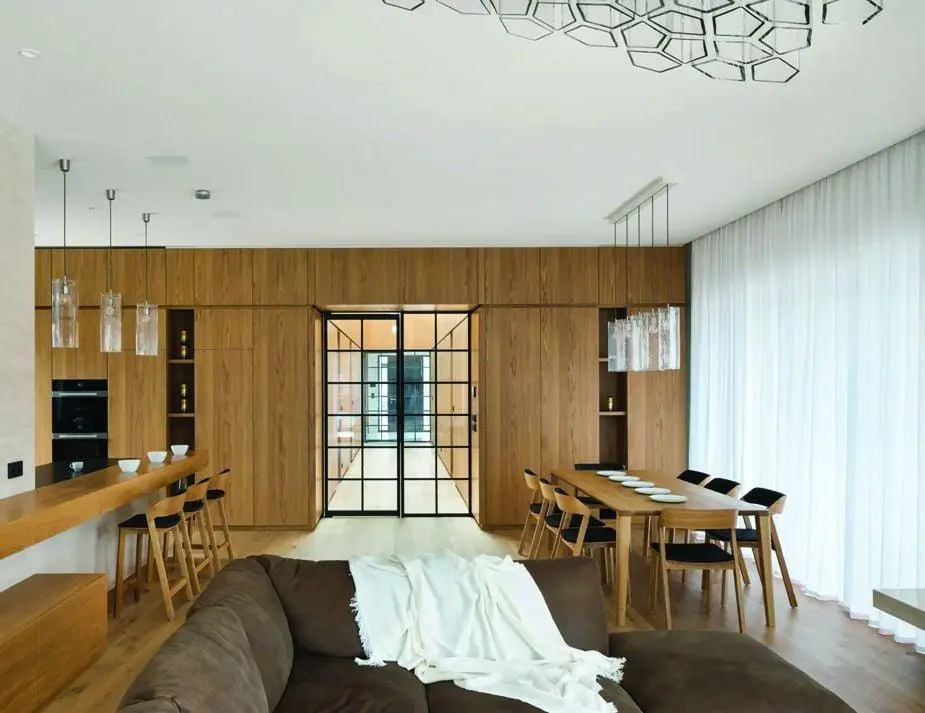 The strongest dining spaces are designed as a complete system rather than a collection of individual pieces.
Proportion and Seat Height: Where Most Specifications Go Wrong
Standard dining chairs sit at 45–48 cm, built for tables at 74–76 cm. In luxury interiors, this pairing is routinely disrupted by statement tables: thick engineered stone slabs and concrete aprons that sit 2–4 cm higher than the norm. The fix is production-stage seat-height adjustment, not a retrofit. A retrofit compromises the frame geometry; a production-stage adjustment is engineered from the outset and invisible in the finished room.
One detail most specifiers overlook: arm height against table apron clearance. In open-plan interiors where the chair is visible from multiple sightlines, the armless-versus-armed decision is as much architectural as ergonomic.
Comfort Matters More Than Most Buyers Expect
Visual appeal often dominates early decision-making, yet comfort becomes the defining factor once the furniture enters daily use.
For dining environments where guests may remain seated for two hours or more, consider:
- Seat depth and angle
• Lumbar support
• Cushion density
• Backrest height
• Arm support where appropriate
The most successful dining chairs achieve a balance between visual refinement and ergonomic support. Excessively sculptural designs frequently photograph well but perform poorly during extended use.
Material Selection: What a Hot, Air-Conditioned Climate Demands
The daily cycle between outdoor heat and aggressive air conditioning, often a 15–20°C differential, stresses timber joints in ways poorly prepared wood cannot handle. Serious Italian workshops kiln-dry frames to 6–8% moisture content before cutting begins, roughly half that of untreated timber. In this climate, that is a structural prerequisite, not a luxury detail.
High-performance engineered materials now outperform natural alternatives on every measurable dimension: abrasion resistance, UV stability, cleanability, and colourfastness. High-grade synthetic upholstery reaches durability ratings no animal hide approaches, without the environmental extraction costs of its natural counterpart. Montalbano specifies engineered materials wherever they perform better and cost less ecologically.
Clients who specify correctly do not replace their furniture. After years of use, they may refresh an upholstery fabric. The frame itself does not become the problem.
What Separates Premium Italian Dining Chairs from Standard Production
Not all Italian furniture is produced to the same standard. The most respected workshops keep frame construction, joinery, and upholstery within a single production process, resulting in better consistency and durability.
For residential and hospitality projects, quality manufacturing helps furniture maintain its appearance, comfort, and structural integrity for years.
Ready to Specify?
Whether you are furnishing a private villa, procuring for a hotel restaurant, or still in the early stages of a brief, the most efficient next step is a showroom conversation. Bring your table dimensions, a photograph of the space, and a direction, even a loose one.
Book a private consultation and let the brief lead from there.
FAQs
How do I know if dining chairs will fit my table?
Check two numbers: your table height and the chair’s seat height. The gap between them should be 28–30 cm. Also confirm arm height clears the table apron, as arms that hit the apron edge are one of the most common and most avoidable dining room mistakes.
How many chairs should I get for my dining table?
Allow at least 60 cm of table edge per person for comfortable seating. For a luxury setting, 70–75 cm per seat feels generous and intentional. Always round up, as an under-chaired table looks sparse and unfinished.
Are expensive dining chairs actually worth it?
The difference shows at year three or four, not year one. Premium chairs hold their joint stability, upholstery density, and finish. Cheaper alternatives may look similar on delivery but start showing frame movement and fabric wear well before a quality piece would.
What dining chair material is easiest to maintain?
For everyday luxury use, high-grade synthetic upholstery and engineered stone or lacquered timber frames outperform natural alternatives. They resist staining, UV fading, and humidity, especially relevant in homes with strong air conditioning or outdoor adjacency.
Can mismatched chairs work around one dining table?
Yes, if the variation is controlled. Mixing finishes or silhouettes works when seat height, depth, and proportion stay consistent across all chairs. Mixing those structural elements as well is what makes a table look unplanned rather than curated.


