




Looking for a Furniture Supplier for Your Next Project? Here’s What Actually Matters
17 August 2026
Choosing a furniture supplier is about more than finding attractive pieces. For commercial and hospitality projects, the decision comes down to quality, reliability, specification support, lead times, and above all, what happens after the furniture is delivered. A beautiful catalogue means little if the pieces can’t stand up to daily commercial use, or if the supplier disappears the moment the invoice is settled.
 This is particularly true for anyone comparing furniture suppliers in the UAE, where hospitality and commercial developments move quickly and expectations around quality are high. Whether you’re sourcing for a single site or a multi-location rollout, the right partner will shape the outcome as much as the furniture itself, and the partnership doesn’t end at delivery.
What Should You Look for in a Furniture Supplier?
Before comparing catalogues, it helps to know what actually separates a dependable commercial furniture supplier from one that simply sells furniture. A few things matter most:
- Quality and durability – furniture that holds up to daily use, not just showroom conditions
- Commercial suitability – pieces designed and tested for contract environments, not domestic ones
- Project experience – a track record with projects similar in scale and complexity to yours
- Product range – enough depth and variety to furnish a full space cohesively
- Customisation – the ability to adapt finishes, sizes and materials to your brief
- Lead times and reliability – realistic timelines that a project schedule can actually depend on
- After-sales service – ongoing support, warranty cover, spare parts and responsiveness once the furniture is in use
If a supplier can speak confidently to each of these points, it is generally a good sign they have handled projects like yours before. This is where a conversation with a team such as Montalbano Dubai tends to be more useful than browsing a catalogue alone, since project requirements rarely fit neatly into a standard product list.
After-Sales Service: The Factor That Matters Most
Of everything on that list, after-sales service is arguably the one clients underweight most, and the one that costs them most when it’s missing. Furniture selection tends to get all the attention during a project, but a hotel lobby, restaurant or office is in daily use for years after handover. Chairs get re-glued, fabrics get re-covered, table bases get replaced after wear, and finishes need occasional attention. A supplier who vanishes once the order ships leaves you managing all of this alone, often at a much higher cost and with no guarantee the replacement parts will even match.
A strong after-sales offering typically includes:
- Clear warranty terms on frames, mechanisms and finishes
- Availability of spare parts and matching materials for years after the original order
- A responsive point of contact for repairs, replacements or reordering
- Willingness to support reordering for future phases or additional sites, matching the original specification exactly
When you’re comparing suppliers, ask directly what happens a year or five years after delivery. The answer tells you more about the supplier’s reliability than any catalogue can.
Does the Supplier Understand Commercial and Hospitality Projects?
A hospitality furniture supplier needs to understand more than aesthetics. Hotels, restaurants, cafés, offices and other commercial spaces all come with their own demands around durability, guest comfort, consistency across large orders and compliance with contract-grade standards.
Montalbano Dubai works specifically within this space, supplying premium Italian and European furniture for hospitality and commercial projects across the region. The difference between domestic and contract furniture isn’t always obvious at first glance, but it becomes very clear after a year of daily use in a busy restaurant or hotel lobby. This is why project experience, and ongoing support, matter as much as product design.
Can the Supplier Provide the Right Furniture for Your Specification?
A project brief rarely stops at chairs and tables. It usually includes:
- Chairs and seating
- Tables and complete table solutions
- Table tops and table bases
- Materials and finishes
- Sizes and dimensions
- Indoor and outdoor requirements
- Consistency across multiple pieces or locations
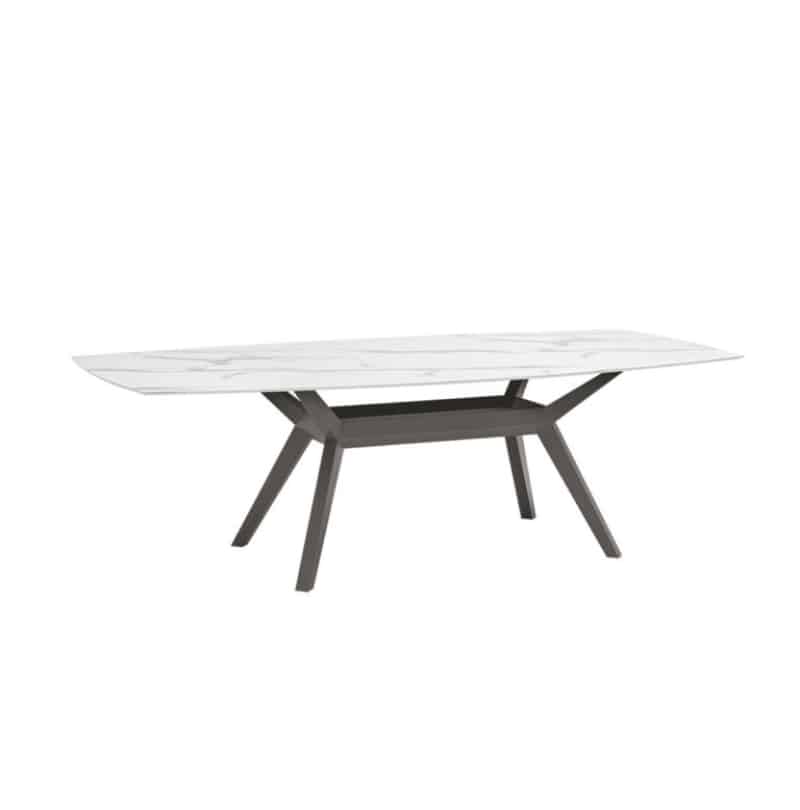
Table tops and table bases deserve particular attention here, since they are often specified separately and need to work together structurally as well as visually. A table top has to balance aesthetics, stability, durability and the exact dimensions the space calls for, while the base needs to support it safely under regular commercial use. Getting this pairing wrong is a common (and costly) mistake in furniture specification, so a supplier who can advise on both elements together, rather than selling them as unrelated products, adds real value to the process.
Can the Supplier Match Your Project Specification?
Specification support is where an experienced supplier earns its place on a project. This typically covers finishes, fabrics, materials, colours, dimensions and custom requirements, along with consistency across larger orders. For table tops specifically, porcelain is increasingly specified over natural marble in commercial settings, as it offers similar visual appeal with better resistance to staining, scratching and heat. Similarly, performance fabrics and technical leather alternatives are now widely used in place of genuine leather, offering comparable comfort with far greater durability under commercial wear.
A supplier who can talk through these trade-offs, rather than simply confirming whatever is asked for, is generally one worth working with on a larger scale.
Why Consider Italian and European Furniture?
Italian furniture suppliers have built a reputation around design integrity, craftsmanship and material quality that holds up over time, all qualities that matter when furniture needs to perform under professional contract conditions for years, not just look good on delivery day. Montalbano’s collections draw on established manufacturing regions across Italy and Europe, bringing that craftsmanship to hospitality and commercial projects across the UAE and wider GCC market.
What Should You Ask Before Choosing a Furniture Supplier?
A few direct questions tend to reveal how well a supplier fits a commercial project:
- Is the furniture suitable for contract use?
- Can you customise the furniture to our specification?
- What are the realistic lead times?
- Can you provide technical specifications and documentation?
- Can you supply complete table solutions, including table tops and bases?
- Have you supplied furniture for similar hospitality or commercial projects?
- Can you support larger commercial orders across multiple sites?
- What after-sales support do you provide once the furniture is delivered and in use?
Why Professionals Choose Montalbano Dubai
Montalbano works with architects, interior designers and procurement teams on hospitality and commercial projects across the UAE and GCC, offering:
- Italian and European furniture collections
- Contract project experience
- A hospitality and commercial portfolio
- Tables, table tops, bases and complete furniture solutions
- Specification and technical support
- Quality-focused, contract-grade products
- Reliable support throughout the project
Choose a Furniture Supplier That Understands Your Project
The best furniture supplier isn’t simply the one with the most attractive catalogue. It’s the one that provides the right products, the right specifications, consistent quality, and stays available long after delivery, when repairs, replacements and reorders inevitably come up. That after-sales relationship is often what separates a good first impression from a supplier you’d actually work with again.
If you’re currently sourcing furniture for a hospitality or commercial project, get in touch with Montalbano Dubai today. Our team will talk through your specification, advise on the right materials and finishes, and stay with you well beyond delivery to make sure your project is furnished properly, and stays that way.
FAQs
What’s the difference between a commercial furniture supplier and a regular furniture retailer?
A commercial furniture supplier designs and sources furniture built for contract-grade use, meaning it’s tested for heavier daily wear, warranted for commercial settings, and typically comes with specification support and after-sales service that a standard retailer wouldn’t offer.
How do I know if furniture is actually suitable for hospitality use?
Ask the supplier directly whether the range is rated for contract or hospitality use, and request any technical documentation or durability testing behind it. If they can’t answer clearly, it’s usually a sign the furniture wasn’t designed with commercial environments in mind.
Can table tops and table bases be ordered separately from different suppliers?
Technically yes, but it’s generally not advisable, as mismatched dimensions, fixings or load capacities can create stability and safety issues. Sourcing both from the same supplier makes it far easier to get a properly matched, structurally sound result.
Why do some suppliers use porcelain instead of marble for table tops?
Porcelain offers a similar high-end appearance to natural marble but with considerably better resistance to staining, scratching and heat, which makes it a practical choice for busy commercial and hospitality settings.
How far in advance should I contact a furniture supplier for a commercial project?
As early as possible, ideally at the specification stage. Lead times for custom or Italian-manufactured furniture can be longer than off-the-shelf options, so early conversations give the supplier time to plan production and delivery around your project timeline.
Why does after-sales service matter more than most buyers expect?
Furniture in a commercial setting takes years of continuous use, not the occasional wear of a home. Fabrics need re-covering, mechanisms need servicing, and pieces get damaged and need matching replacements. A supplier without a genuine after-sales offering leaves you sourcing all of this yourself, often years later when the original specification is hard to trace. This is why after-sales support should be weighed as heavily as the furniture itself.


