

How to Choose Outdoor Furniture Colours Using Nature as Your Guide
6 July 2026
Choosing outdoor furniture colours is a genuine design decision, not a guessing game. A shade that looks right in a shop can feel out of place once it’s sitting under real sun, next to real stone and greenery. The fix is simpler than most people think: look at what’s already outside your door, the paving, the planting, and the light, and let those elements guide the palette. This guide walks through how sand, stone, greenery, water, and earth tones translate into real furniture choices, and how Montalbano applies this thinking across the villas and private homes it furnishes across the GCC.
 Read the Space Before Choosing Furniture Colour
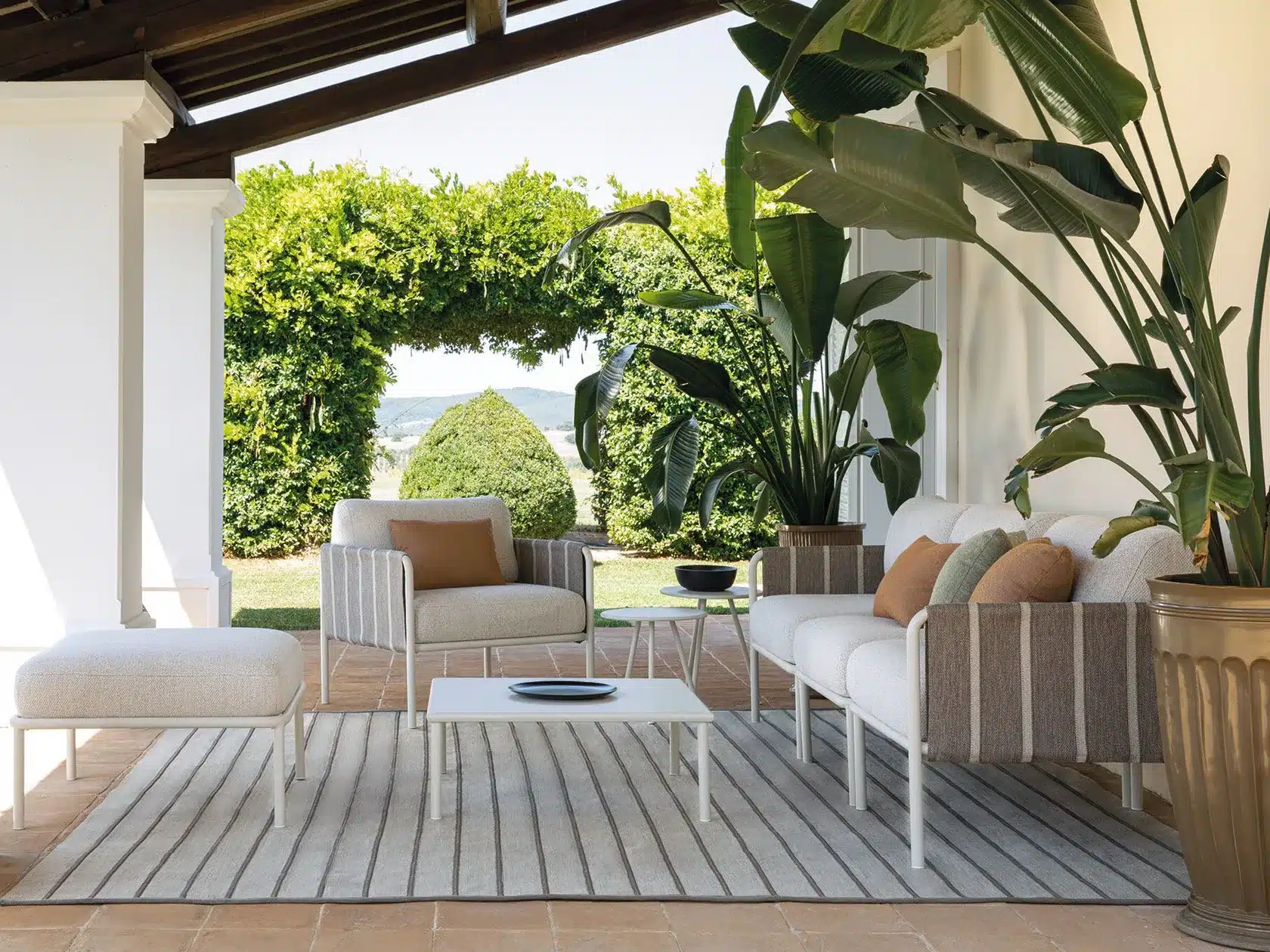
Look at your outdoor space before you look at a catalogue. The paving, the plants, and the light won’t change, so they should shape your furniture colour, not the other way round. A shaded north-facing terrace will soften colours, while a west-facing terrace under afternoon sun can make warm tones appear stronger and darker finishes feel heavier. At Montalbano, our designers assess the orientation, light, and surrounding materials on site before proposing a palette. It’s why pieces we’ve supplied to villas across the region still look right years after delivery. Speak to our team and we’ll assess your space before we talk about furniture.
Best Outdoor Furniture Colours for Gulf Terraces and Gardens
Sand, white, taupe, and soft grey are ideal for lounge chairs and dining tables in this region, reflecting local stone, sunlit architecture, and the natural palette commonly found in Gulf outdoor spaces. These lighter, warmer neutrals also tend to feel calmer under strong sunlight compared with very dark or highly saturated colours, making them a practical starting point for terraces, gardens, and poolside areas. A matte powder-coated aluminium frame in a warm neutral often feels softer outdoors than a gloss finish, which reflects more light and can make colours appear brighter. For outdoor spaces that get regular sun exposure, it is also worth considering fabrics and finishes designed for outdoor use, so the furniture feels suitable not only for the setting but also for the climate.
Matching Outdoor Seating Colours with Garden Greenery
Olive, sage, and deep green tones tie outdoor seating into an established garden, and they suit rope and woven furniture particularly well. Most woven outdoor pieces today use synthetic fibres like HDPE rather than natural rattan, which also means these greens hold their tone reliably through sun and humidity rather than fading the way natural fibres can. If you’re choosing teak, remember that its natural silver-grey patina is often an intentional part of the design rather than a flaw.
Using Accent Colours for Outdoor Lounge and Poolside Spaces
Soft blues suit poolside cushions and seating, but only in small doses. One or two pieces read as intentional, while a full matching set can feel too themed. Terracotta, rust, and ochre work the same way on cushions and accents, holding their colour well season after season near pool chemicals and direct sun. Keeping accent colours similar in depth and saturation helps the overall scheme feel balanced rather than busy.
The Montalbano Dubai Approach to Outdoor Furniture Design
Most outdoor colour schemes fail for one reason: too many competing tones. Our approach is a neutral base like sand or stone with a single accent drawn from the garden, pool, or surrounding architecture. In practice, across the villa projects we supply, clients rarely replace outdoor furniture frames for quality reasons; years in, they refresh the fabric on a sofa or lounge chair because the frame underneath was built to outlast it. That is the real measure of good furniture design, and it shapes how freely we can play with colour and finish on the parts that do get refreshed, whether that’s a table top or a trim detail, without worrying about how the frame or base will hold up underneath.
Choose Outdoor Furniture Colours for Your Home
Colour is the easiest outdoor decision to test before committing to try it with cushions before buying a full sofa or dining set. If you’d rather have a considered palette from the start, Montalbano Dubai supplies Italian-made outdoor collections built for Gulf heat to private homes and villas across the UAE and wider GCC. Get in touch and we’ll help you build a scheme that suits your space, not just the season.
FAQs
What’s the actual difference between solution-dyed and regular outdoor fabric?
Solution-dyed fabric holds its colour far more evenly over time, without the patchy fading you get from surface-dyed fabric in direct sun. If a colour matters to your overall scheme, it’s worth asking your supplier which process they use before you order.
My outdoor cushions faded and stiffened within a year, what went wrong?
Usually it’s the fabric rather than the colour itself. Look for solution-dyed or UV-stable fabric next time; it holds the tone you chose instead of drifting or bleaching out.
I’m furnishing a villa terrace that gets used daily, which colours hold up best?
Mid-tone sand, taupe, or olive hide daily wear from suncream, food, and pool splashes far better than very light or very dark upholstery, which is why most experienced designers default to these tones for family terraces rather than trend colours.
Is synthetic weave or faux marble actually lower quality than natural material?
Not necessarily. Good synthetic finishes are chosen deliberately by high-end suppliers, not as a budget substitute, and they tend to keep their colour and finish more consistently over time than natural equivalents.
I have no fixed style yet, where do I even start with outdoor furniture colour?
Start with what won’t change: your paving, your planting, and your view. Pick a neutral (sand, stone, or grey) for the main pieces, then add one accent colour from your garden or pool. That’s a workable starting point even before you’ve settled on a full design direction.


