

Bar Chairs vs. Bar Stools: Key Differences for Premium Interiors
30 June 2026
Bar chairs and bar stools are often grouped into the same category, but the distinction can have a real impact on comfort, function, and how a space feels day to day. Whether you’re furnishing a kitchen island, a hospitality venue, or a private residence, understanding what separates the two helps the seating actually support the room it’s going into.
At Montalbano, it’s one of the most common questions we get from homeowners, designers, and hospitality clients. The answer is never the same twice, because the right choice depends on the room, the counter, and the people using it.
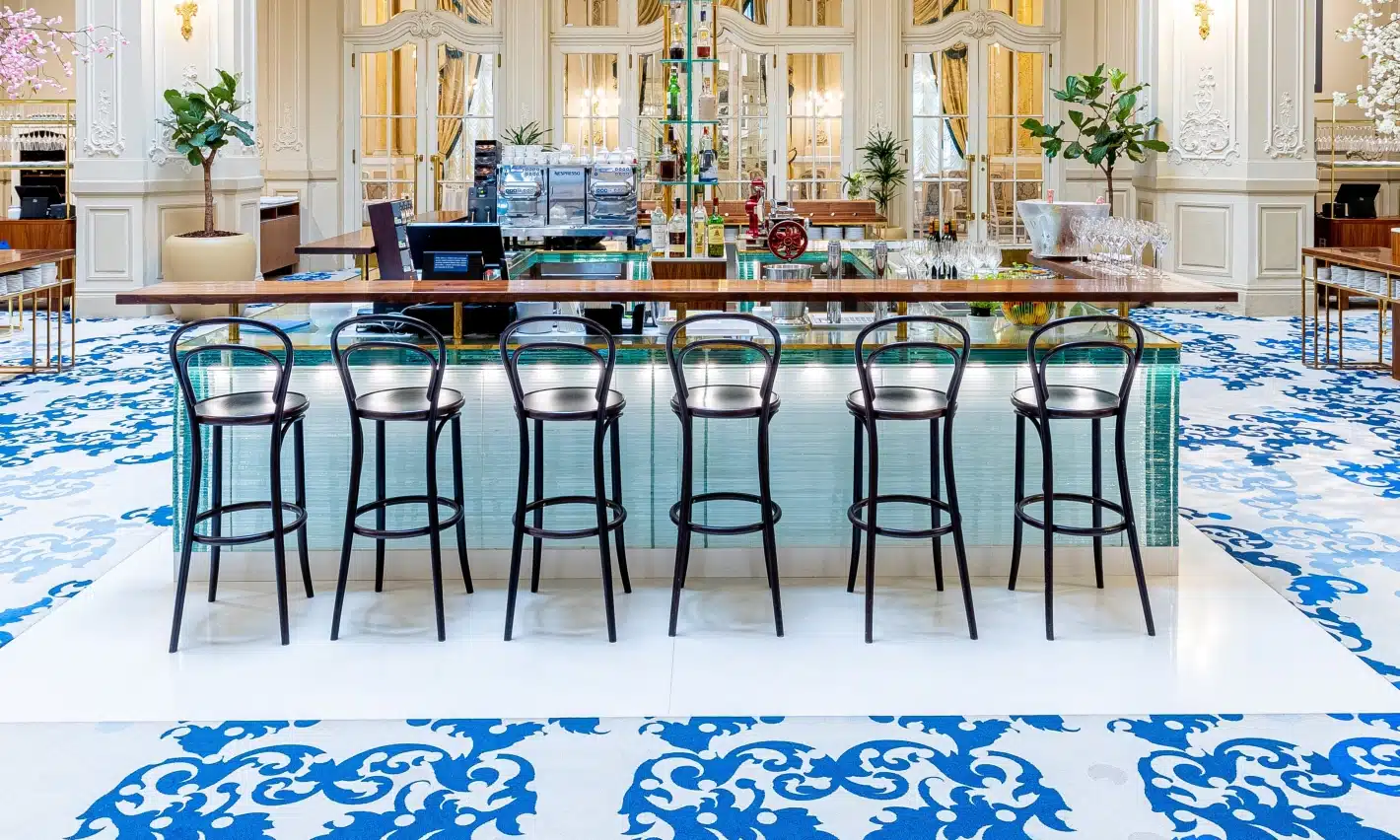 Bar Chairs vs. Bar Stools: Backrest, Posture, and Intended Use
Bar chairs are built around longer sitting. The backrest is typically upright with a slight recline, and the seat is contoured to support the sit bones and thighs through a meal or a long conversation, not just a quick perch.
Bar stools are built around movement. No backrest, often a swivel base, and a more open profile that lets people sit, turn, and stand with ease. That’s what makes them work so well in cocktail bars and social spaces where people are constantly shifting in and out.
So the real question isn’t which option looks better. It’s how long people will actually be sitting, and how often they’ll need to get up.
Counter Height vs Bar Height: Choosing the Right Seat Height
This is where the specifics matter, and where most buying decisions go wrong.
Counter-height surfaces, the European standard for most kitchen islands, sit at around 90cm. The correct seat height for that surface is approximately 66cm, leaving a clearance of roughly 24–26cm between the seat and the underside of the counter. Bar-height surfaces run higher, typically 105–110cm, and require seating at around 73–76cm seat height. The ergonomic target in both cases is the same: 25–30cm of clearance between the top of the seat and the underside of the surface, enough for the thighs to sit roughly parallel to the floor without pressure at the knees.
These numbers are not interchangeable. A stool specced for bar height placed at a counter-height surface will leave the seated person wedged with no legroom. A counter stool at a bar-height surface puts the user reaching upward for every interaction. Even a 5cm mismatch registers immediately as discomfort, even when the person experiencing it can’t identify why.
Two details that often get overlooked: first, always measure to the underside of the counter, not just the surface height. A thick waterfall edge or structural overhang reduces the actual clearance regardless of what the spec sheet says. Second, at bar height, the user’s feet will not reach the floor, which makes a well-positioned footrest essential rather than optional. A footrest placed 30–40cm below the seat supports circulation and reduces fatigue significantly during extended use.
Scale Changes How a Room Feels
Bar chairs carry more visual weight. The backrest and fuller form make a kitchen island read as a proper dining zone, more permanent and more furniture-like.
Bar stools do the opposite. They’re lighter, more transparent, and keep sightlines open, which is why they tend to work better in smaller spaces or open-plan layouts where you don’t want the seating to dominate the room.
Neither is inherently better. Oversized seating crowds a space; undersized seating looks disconnected. The goal is seating that feels like it was always meant to be there.
Why Material Quality Still Matters
Comfort and proportion come first, but construction is what determines whether that comfort lasts. Frames built to handle daily use, swivel mechanisms that won’t loosen after a year of regular turning, and upholstery suited to how often the piece will actually be touched and sat on: these are the details that separate furniture that holds up from furniture that just looks good on day one.
This matters even more in hospitality settings, where seating gets used far harder than it would in a home.
Choosing the Right Bar Seating for Your Interior
The difference between bar chairs and bar stools comes down to function, posture, and intent, not appearance alone. Chairs suit spaces built around longer sitting; stools suit spaces built around flexibility and flow.
In premium interiors, the best seating decisions balance comfort, proportion, and how the space is actually meant to be used, not just how the piece looks in isolation.
If you’re working on a project where those decisions matter, our Al Quoz showroom is the right place to start. Samples, scale, and no pressure.
FAQs
Are bar chairs more comfortable than bar stools for extended sitting?
For extended sitting, yes. The backrest and contoured seat make a meaningful difference over the course of a meal or a long conversation. But comfort isn’t only about support. In a space where people are constantly moving in and out, a stool’s open profile and swivel base can actually feel more comfortable in practice because it’s not fighting how the space is being used.
How do I calculate the right stool height for my counter?
Measure from the floor to the underside of your counter, not just the surface. The seat height you need is that measurement minus 25–30cm. That gap is the ergonomic clearance your thighs require to sit naturally without pressure. For most European kitchen islands at 90cm, the correct seat height is around 66cm. For bar-height surfaces at 105–110cm, you’re looking at 73–76cm.
My interior designer has already selected a bar stool. Should I raise concerns?
Only if the brief has changed or the counter detail wasn’t fully considered at the time. If the space is being used for longer meals rather than casual drinks, or if the counter height doesn’t match the stool spec, those are worth raising. We work directly with designers on exactly this kind of coordination. It’s easier to resolve at the selection stage than after delivery.
Does Montalbano offer semi-custom bar seating, or only full bespoke?
Both. Semi-custom lets you work from an existing frame design and specify your own material, finish, and seat height with a shorter lead time while maintaining the same material quality. Full bespoke makes sense when the room dimensions, existing finishes, or client brief require something that doesn’t start from a catalogue. We’ll tell you honestly which one suits the project.
How long does custom bar seating take to deliver?
Semi-custom typically runs six to eight weeks. Full bespoke is eight to fourteen weeks depending on complexity. For hospitality projects with a fixed opening date, we build a delivery schedule around the handover rather than quoting a standard lead time.


